Post-op remote monitoring · THA + TKA
See every recovery.
Chase none of them.
Patients check in for two minutes a day. A rules engine reads every submission instantly and tiers what matters. Your team works one ranked queue instead of eighty phone calls — and nothing waits for the two-week visit.
Patient review queue
live- 1new
M. Garcia
TKA · POD 5
Temp 101.8°F
- 2new
R. Kim
THA · POD 8
Mobility worsening
- 3assigned
J. Okafor
TKA · POD 12
Mild swelling ↑
- 2assigned
L. Tran
TKA · POD 19
ROM regression −8°
37-test rules engine · evaluated on every check-in · surgeon-specific thresholds
per patient check-in — under a third need any review at all
clinical rules run against every submission, instantly
alert tiers, so severity is decided before you look
of continuous coverage between visits — not two snapshots
No mockups
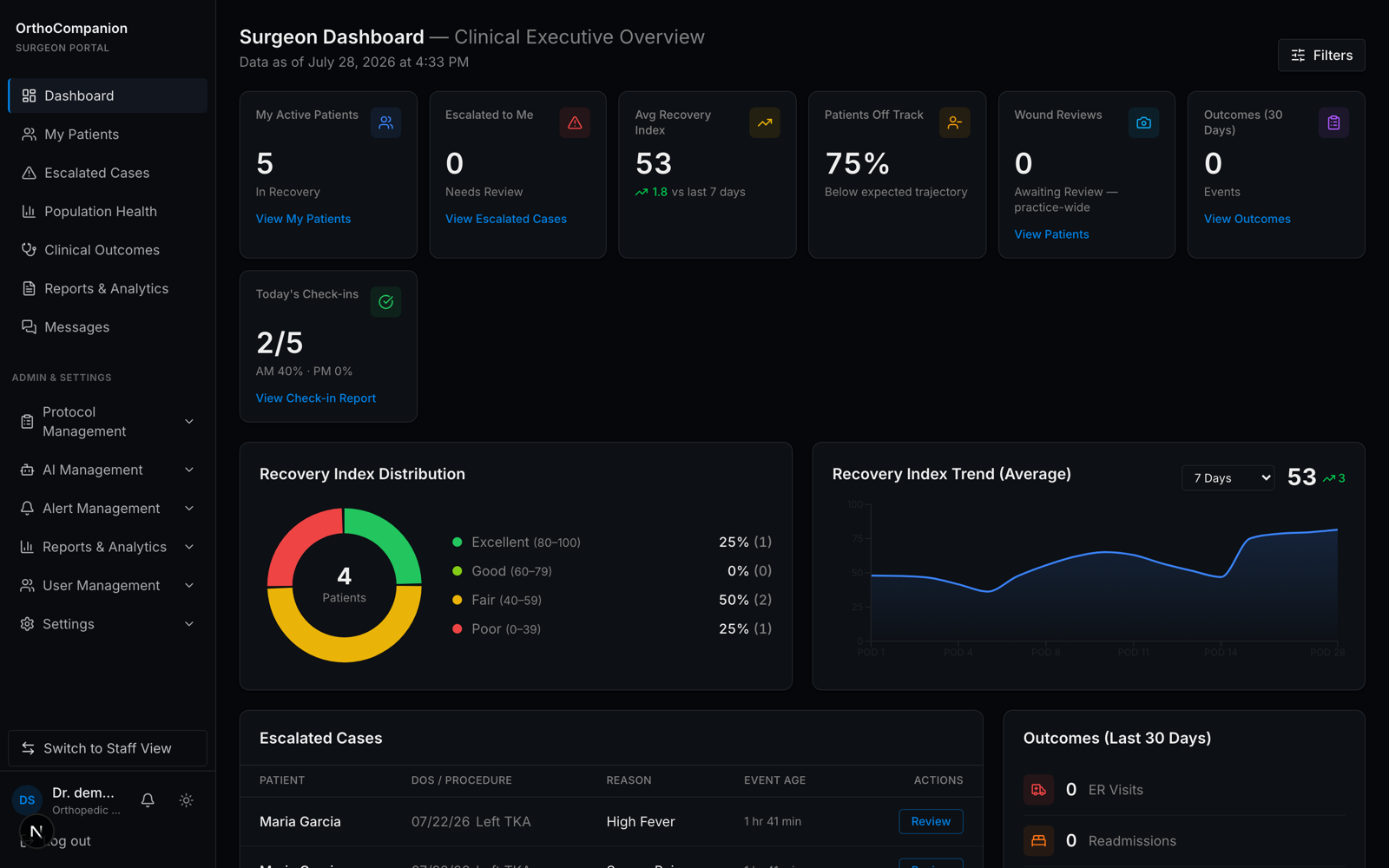
These are the actual dashboards, captured running
The real product — live captures
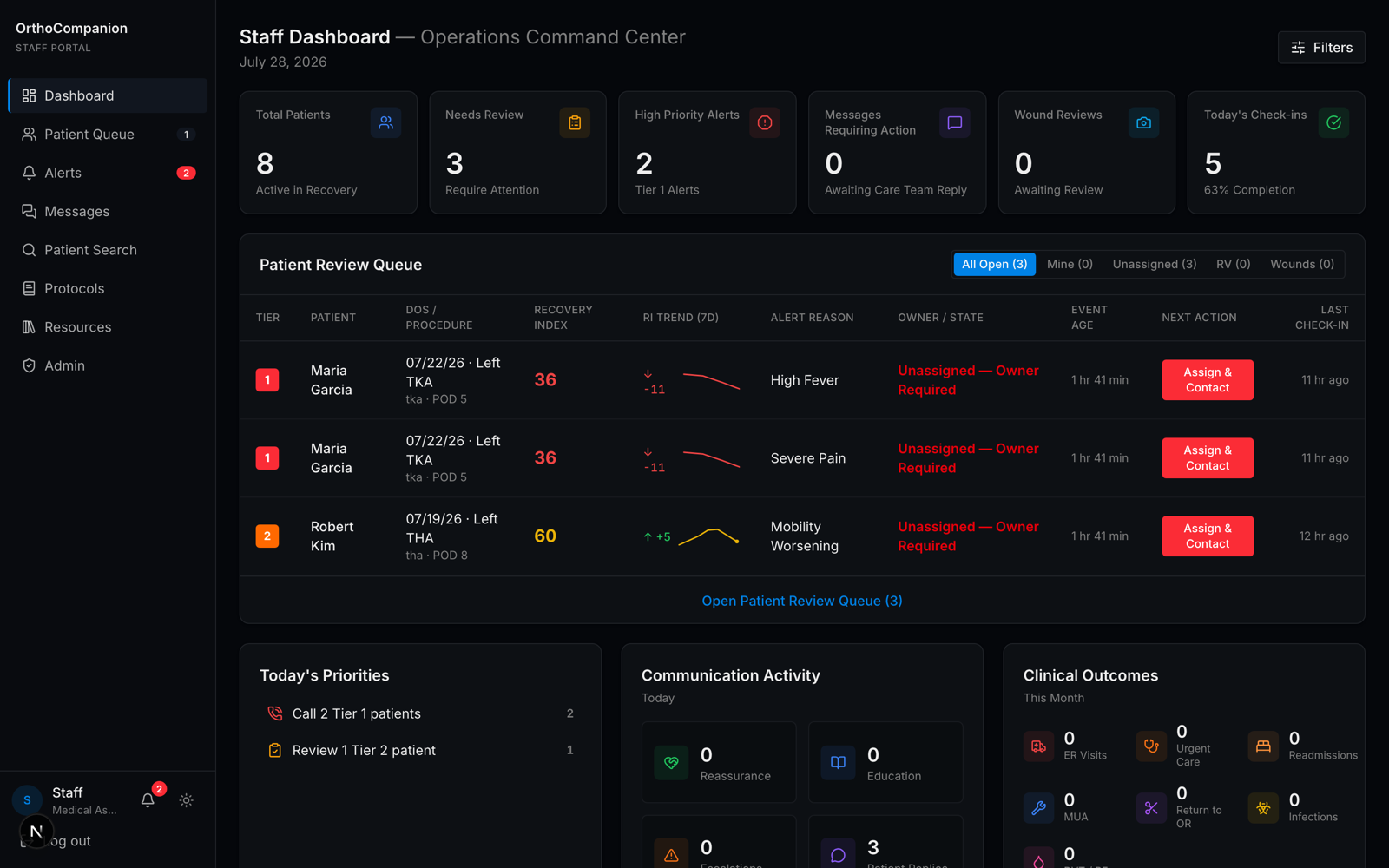
The operations command center
Every open alert ranked by tier, recovery index, and trend — with assignment ownership, event age, and next actions. Your team starts the morning knowing exactly who to call first.
scroll to walk the floors ↓
Built for the 7:45am huddle
Morning triage in four moves
Walk the queue
Keyboard-first triage — no clicking through charts
Open full context
Timeline, trends, wound photos, ROM — one panel
Assign & contact
Owner set, patient called, note captured
Resolve
Alert closed with reason — auditable, always
Under the hood
Clinical depth, not a survey tool
TRIAGE
Tiered clinical rules engine
Fever curves, pain trajectories, ROM regression, wound decline, missed check-ins — 37 tests over every submission, tuned per surgeon with your thresholds.
WOUND
AI wound surveillance
Patients photograph the incision on schedule; vision AI flags concern and your clinicians confirm through a structured review ladder. Nothing auto-closes without eyes on it.
ROM
Camera ROM measurement
Pose estimation measures flexion and extension from the patient's phone camera — no goniometer visit. PT sets per-side goals; progress charts itself.
OUTCOMES
KOOS JR & HOOS JR outcomes
Validated instruments collected on your interval schedule, scored automatically, trended against the panel. Registry-ready without the clipboard.
TEAM
Whole-team coordination
Staff triage, surgeon oversight, PA escalations, PT goals — separate dashboards, one record. Everyone sees the same patient, no forwarded voicemails.
ANALYTICS
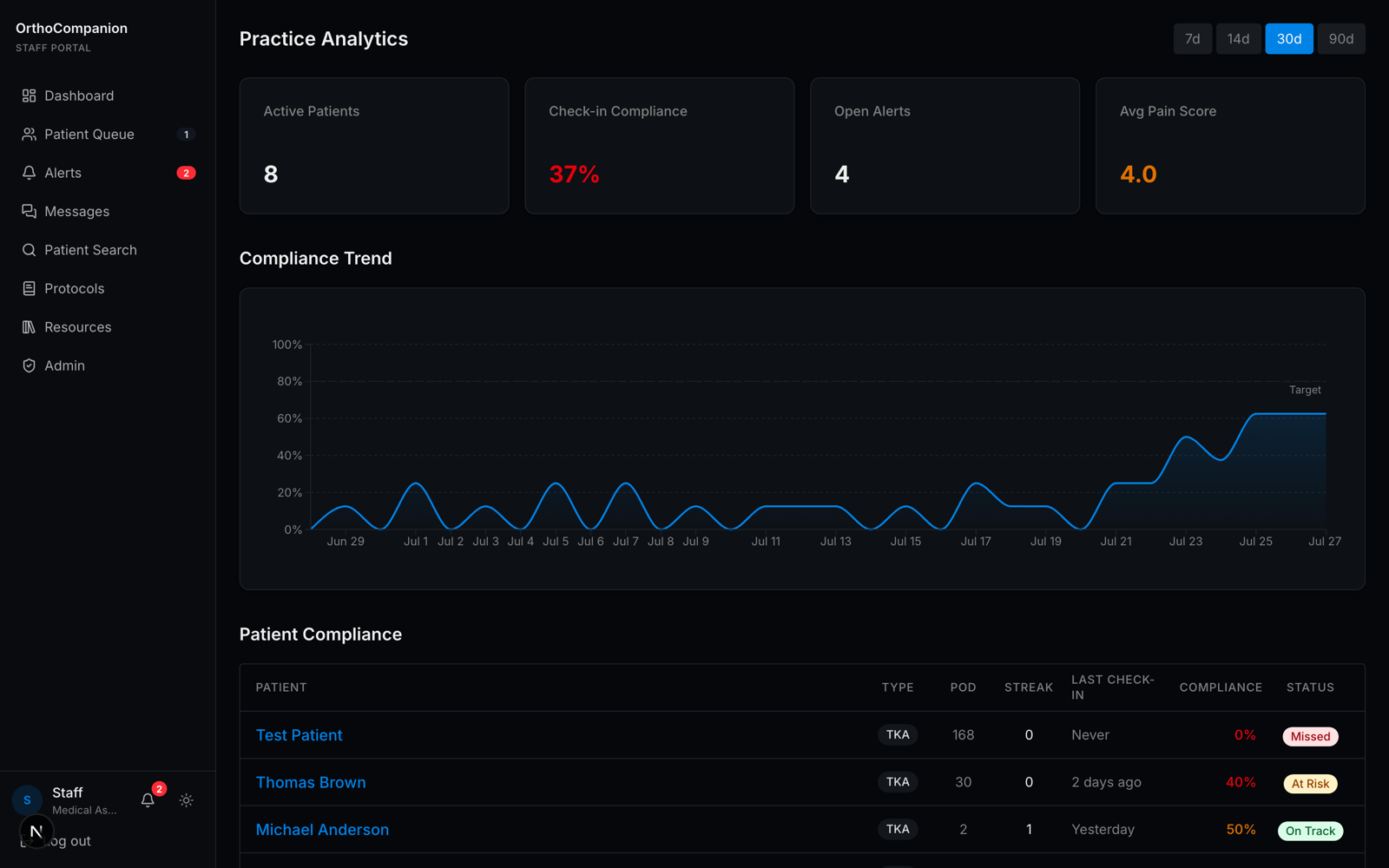
Practice analytics
Check-in compliance, alert mix, time-to-resolution, outcomes by procedure and surgeon — the evidence that remote monitoring is earning its keep.
Where the hours go
What your team stops doing
Calling every post-op daily “just to check”
Calling the three the engine flagged
Triaging voicemail by who sounds worried
A queue already ranked by clinical severity
Finding problems at the 2-week visit
Finding them the morning they start
Bring OrthoCompanion to your practice
Enrollment takes your front desk minutes per patient. Your protocols, your thresholds, your team’s workflow — watched around the clock.